


The 2025 Mitsubishi Outlander Owner's Manual, available in PDF format, provides comprehensive instructions on operating features, maintenance schedules, and essential vehicle care.
👉 View online or download for free now!
2025 Mitsubishi Outlander Owner's Manual


| General | Details |
|---|---|
| Name | 2025 Mitsubishi Outlander |
| Make | Mitsubishi |
| Language | English |
| Filetype | PDF (Download) |
| File size | 19.68 MB |
 (1 votes, average: 5.00 out of 5)
 Loading...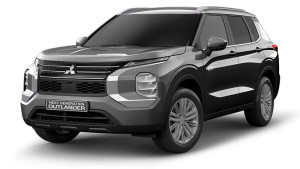
2026 Mitsubishi Outlander

2026 Mitsubishi Eclipse Cross
2026 Mitsubishi RVR/ASX
2025 Mitsubishi RVR/ASX
2025 Mitsubishi Mirage
2024 Mitsubishi Triton
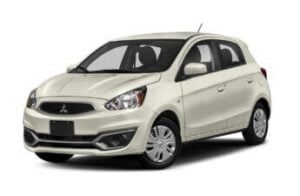
2024 Mitsubishi Mirage

2024 Mitsubishi Eclipse Cross

2024 Mitsubishi Outlander
2023 Mitsubishi Outlander Plug-in Hybrid
2025 Mitsubishi Outlander – being a highly electrified car, the major focus is on the powertrain. There is a 2.4-liter gasoline-powered four-cylinder engine and two electric motors in this propulsion system. It provides a combined summative output of 302 hp and 400 Nm of peak torque. It has an automatic transmission and an “S-AWC” all-wheel-drive system of up to seven settings.
However, more than ever, it is particularly significant to consider how we will get usage of our future car to select among various powertrains. The Mitsubishi Outlander PHEV 2025 remains a plug-in hybrid, and this fact makes it a highly appealing mid-to-large SUV, particularly to those who can charge the vehicle daily on the home (or workplace) and will mostly spend time in the city. Let’s break it down.
The Outlander PHEV is the fourth generation of the 4.71-meter-long SUV whose focus is especially family-concentrated. It only has a plug-in hybrid powertrain that can qualify it to receive the Zero Emissions label that the DGT offers. It has 306 hp, which is attributed to the use of a gasoline engine and two electric motors, one on each axle. This offers all-wheel drive. Yet, even with this power production, it is a car that is good in comfort, driver friendliness, acoustic isolation and responsiveness in certain circumstances and not sporty- something that it does not know or desire to know.
In the Spanish market, the base price is EUR45,147 on the Motion 4WD version. Most importantly above it are the Kaiteki, EUR51, 181 and the Kaiteki+, EUR53, 698 (and the object of this test). It also has a special First Edition that has exclusive equipment. Any discounts which are provided under MOVES Plan (a government incentive program) would be subtracted on this price as long as it has not been claimed out in your area.
Some of its closest competitors include family-centered plug-in hybrid SUVs, including Skoda Kodiaq, the Opel Grandland, and the Honda CR-V, competing with each other based on space, power, and equipment. They target all the customers who are interested in the same: huge interior, the latest technology, and the possibility to drive in the 100% electric mode in their daily activities.
The Outlander PHEV is powered by a 2.4-liter gasoline engine that yields 136 hp along with two electric motors, one that powers the front with 116 hp and the other that powers the rear with 136 hp resulting in an approximate overall output of 306 hp. This design permits an electric all-wheel drive and smart power distribution according to the road conditions.
Its 22.7 kWh battery has a range of between 84 and 86 km when using electric energy alone (WLTP cycle) (depending on the trim level), and a maximum range, as a combination of the two energy sources, of approximately 834 km. The stated rate of 0.8 l/100 km is only the official fuel consumption, which in reality will be heavily reliant upon the utilization of the electric mode, as it would be seen later.
It has a 2.4-liter naturally aspirated gasoline engine, two electric motors (one in each axle) and a 22.7 kWh battery that can provide a real-world electric range of 55 to 70 km, although it is rated at 85 km. Consumption may be greater than 30 kWh/100 km in the city or in traffic jam, whereas in steady driving, electric consumption is quite minimal. Our test drive provided a reading of 23.2 kWh/100 km on the trip computer.
The same engineers have also strived to improve the dynamics of this fascinating SUV with a retuned steering system added to it, new springs, dampers, and stabilizer bars, which made its handling more precise than before.
But these Mitsubishi Outlanders do not alter anything mechanically as it still retains the use of a 2.5 MIVEC engine, merely, a naturally aspirated, four cylinder gasoline engine that can still produce 184 hp at 6,000 rpm and 245 Nm of torque at 3,600 rpm. This force is transferred to the front wheels only through a CVT automatic transmission. This SUV can be fitted with a four-wheel-drive system, which is included in the high-end model, but costs an extra $1,800 (1,720 euros).
Having an exhausted battery, fuel consumption is fixed at approximately 7-8 l/100 km, but with increased weight or on good roads, it may decrease to 6.5 l/100 km. During our motive we have got an average fuel consumption of 7.3 L/100 km with full load and moderately speeding up and with the air conditioning active. The combined range is more than 700 km with ease.
Long journey, hot weather, the baggage, and no concessions. We had a journey in the Outlander. Four passengers, packed trunk and the air conditioner on. We made a 500 km trip out of town and found our destination to spend a week in the sea. As we drove to our workplace every day, we abandoned the combustion engine to its own devices, and the electric motor was given the center stage. Its range of 85km electric was just enough to go about each day with not a drop of gasoline consumed (up to 130km/h). When it got late all we just had to plug it into a regular home electric socket and charge it overnight.
In charging, the 2025 Outlander PHEV can be charged using fast charging at a CHAdeMO connector (a system used that is becoming more common in Europe), which reaches 80 percent in approximately 32 minutes. It is capable of a maximum of 3.5 kW at a typical home charging point which is not very high when compared to the competitors. It can be recharged in approximately six and a half hours. It has four driving modes (EV, Hybrid, Save, and Charge) and seven different terrain programs: Eco, Normal, Power, Asphalt, Gravel, Snow, and Mud. The intensity of regenerative braking can be regulated.
The major part of the PHEV system is the lithium-ion battery of 22.7 kWh. This battery is more capacitive than the previous generation version and it has a liquid cooling system. The stored energy enables the new Outlander PHEV to travel 86 kilometers in 100 per cent electric mode as per the WLTP cycle.
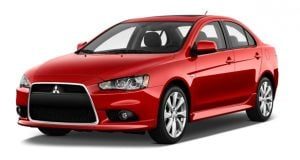
2014 Mitsubishi Lancer
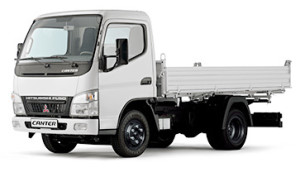
2013 Mitsubishi Fuso Canter

2015 Mitsubishi Mirage
2026 Mitsubishi Eclipse Cross
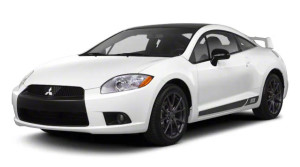
2006 Mitsubishi Eclipse
2024 Mitsubishi Mirage

2007 Mitsubishi Pajero Sport
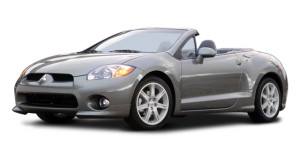
2009 Mitsubishi Eclipse Spyder
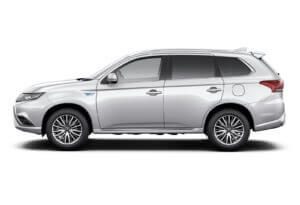
2018 Mitsubishi Outlander PHEV
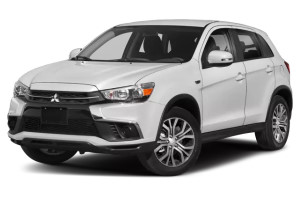
2016 Mitsubishi Outlander Sport
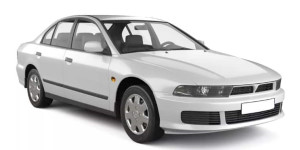
1999 Mitsubishi Galant

2004 Mitsubishi Colt
2007 Mitsubishi Eclipse
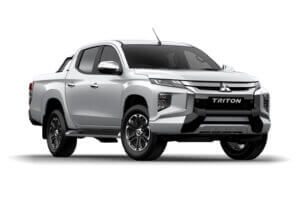
2016 Mitsubishi Triton
2001 Mitsubishi Galant